
Photo ID
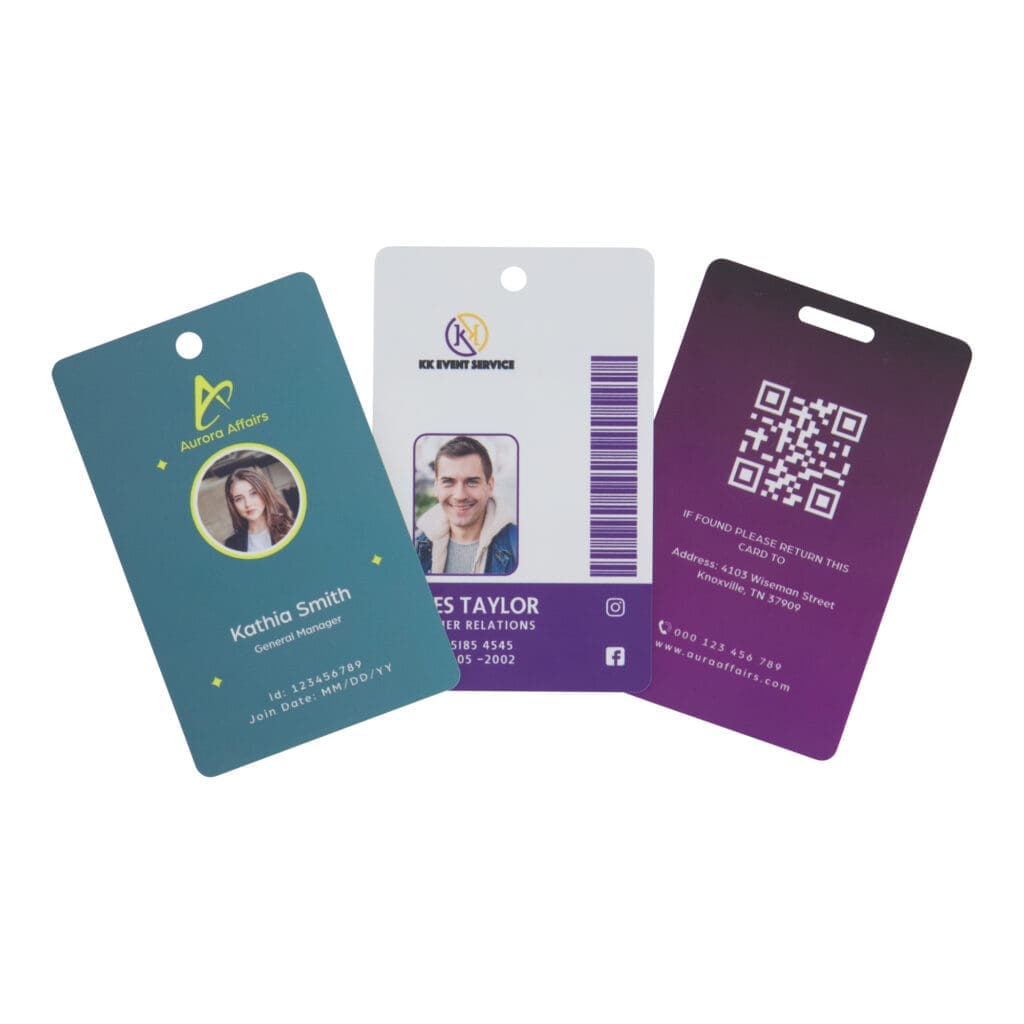
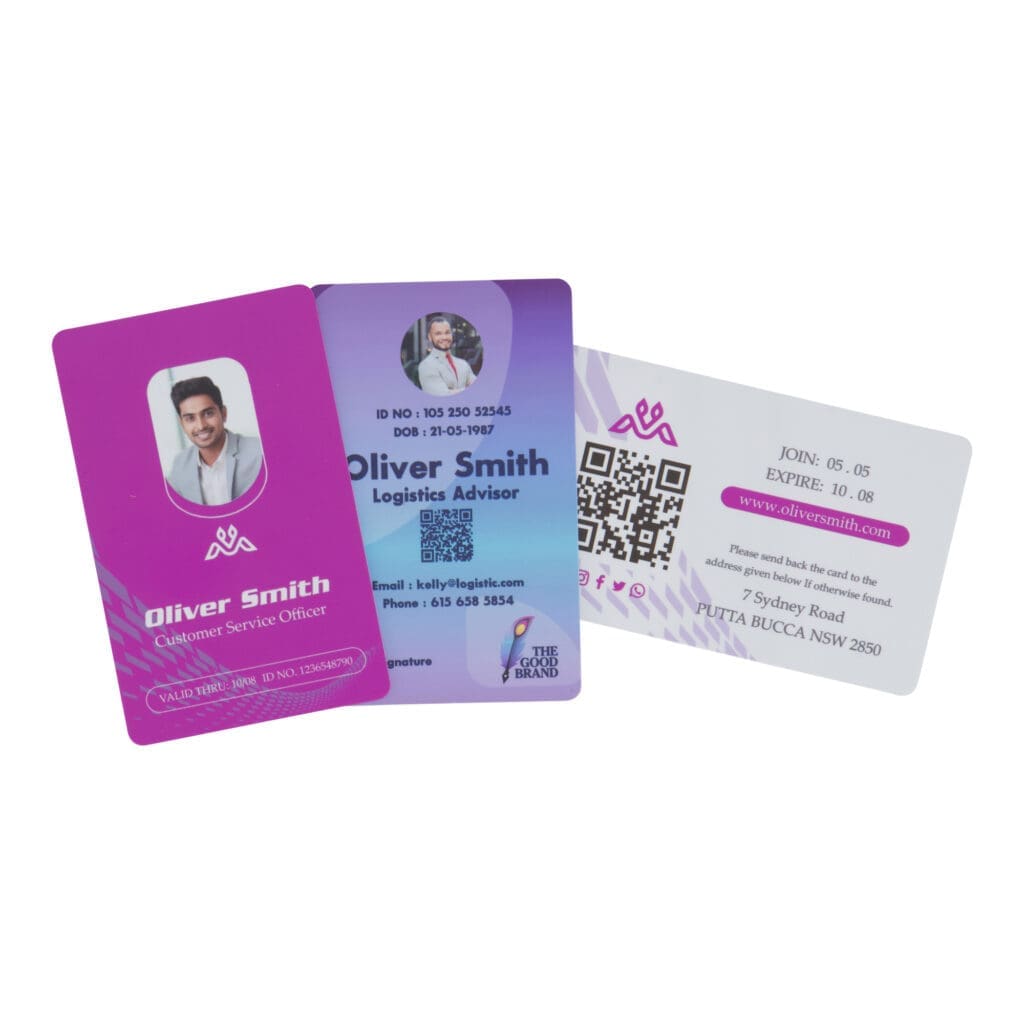
Photo ID Cards in Australia | Custom Printed Employee Credentials
Photo ID cards combine employee photographs with printed identification information through durable PET plastic construction enabling permanent staff credentials for security verification, access control and professional identification across corporate, healthcare, education and government facilities. These custom printed cards utilize CR80 standard dimensions measuring 85.6mm x 54mm x 1mm accommodating ID holders, lanyard attachment and wallet storage throughout Melbourne, Sydney, Brisbane, Adelaide and Perth.
About Our Photo ID Card Range
Full-colour digital printing reproduces photographs accurately. Direct-to-card printing technology enables photographic quality employee images with natural skin tones and clear facial features supporting visual identification.
Variable data individualizes each credential. Employee names, identification numbers, department designations, job titles and hire dates print uniquely across production runs linking physical credentials to personnel databases.
Portrait and landscape orientations suit layouts. Vertical format emphasizes facial photographs while horizontal configurations accommodate additional text fields and organizational logos.
Slot and hole options enable attachment methods. Top-centered slots accept lanyard connections while corner holes support badge reels and retractable attachments.
PET plastic construction delivers durability. Polyethylene terephthalate material resists cracking, bending and environmental damage maintaining credential integrity through multi-year service.
Clear protective overlays prevent wear. Laminated finishes shield printed photographs and information from scratching, fading and moisture exposure extending card lifespan.
Why Choose Photo ID Cards
Visual identification enhances security. Facial photographs enable immediate verification matching credential bearer to issued identification preventing unauthorized access and credential sharing.
Professional appearance maintains standards. Quality printed cards with employee photographs signal organizational legitimacy and security protocols appropriate for client-facing and restricted environments.
Permanent credentials reduce replacement costs. Durable plastic construction eliminates frequent reissuing associated with paper-based identification systems supporting multi-year employment periods.
Database integration supports tracking. Variable data printing links credentials to human resources systems, access control databases and time management platforms.
Multipurpose functionality consolidates requirements. Single credential serves identification, access control, time tracking and department verification eliminating multiple card systems.
Regulatory compliance meets requirements. Photo identification satisfies workplace security regulations, visitor management protocols and industry-specific credential mandates.
PET Plastic Material Properties
Impact resistance prevents breakage. PET construction withstands drops and physical contact without shattering protecting valuable identification cards from damage.
Flexibility accommodates storage. Material properties allow bending for wallet insertion and pocket storage without permanent deformation or cracking.
Chemical stability maintains appearance. PET resists hand sanitizers, cleaning solutions and common workplace chemicals preventing surface degradation or photograph damage.
Temperature tolerance ensures functionality. Cards operate reliably across Australian climate ranges without warping affecting photograph visibility or barcode readability.
Print adhesion delivers permanence. Specialized printing processes bond photographs and text directly to plastic surface preventing peeling or flaking through handling.
UV resistance prevents fading. Stabilized plastics maintain photograph clarity and color accuracy despite prolonged fluorescent lighting or outdoor exposure.
Printing and Personalization Specifications
Photographic reproduction captures facial details. High-resolution printing at 300 DPI minimum ensures clear employee photographs supporting accurate visual identification.
Variable data fields accommodate information. Employee names, identification numbers, departments, positions and expiry dates vary across production without setup changes.
Color matching maintains brand consistency. Pantone color specification enables accurate organizational logo reproduction and corporate identity alignment.
Barcode integration supports systems. Linear and two-dimensional codes enable access control verification, time tracking and attendance monitoring through scanning.
Signature panels facilitate authentication. Designated areas accept permanent marker or ballpoint pen enabling employee signature verification procedures.
Security features deter counterfeiting. Holographic overlays, microtext printing and UV-reactive elements prevent unauthorized reproduction protecting organizational security.
Application Environments
Corporate offices manage employee access. Businesses utilize photo ID cards controlling building entry, department access and parking authorization while displaying employee information.
Healthcare facilities verify staff credentials. Hospitals and medical centers implement photo identification distinguishing employees from visitors while meeting regulatory requirements.
Educational institutions identify personnel. Schools and universities issue photo credentials separating staff from students supporting campus security protocols.
Manufacturing plants control restricted areas. Industrial facilities deploy photo ID cards managing access to hazardous zones and valuable equipment storage.
Government agencies meet security mandates. Public sector organizations implement photo credentials satisfying federal and state identification requirements.
Event venues authenticate personnel. Conference centers and exhibition facilities use photo ID cards distinguishing staff, contractors and authorized personnel from attendees.
Why Choose EziTag
Production capabilities support volume requirements. Melbourne manufacturing processes orders from tens to thousands of cards accommodating organizational growth and departmental expansions.
Variable data expertise ensures accuracy. Experienced production teams manage database integration, photograph placement and personalization verification preventing credential errors.
Contact our photo ID specialists for custom employee credentials with photographic printing and variable data through Australian manufacturing supporting organizational security requirements.
Frequently Asked Questions
What photograph specifications work with photo ID card printing in Australia?
Photo ID cards require digital photographs at minimum 300 DPI resolution with dimensions proportional to designated card placement area. Portrait photographs typically occupy 25mm x 30mm to 30mm x 35mm card space accommodating facial features and shoulders. Images should feature plain backgrounds, forward-facing subjects and adequate lighting ensuring facial feature clarity. Organizations submit photographs in JPEG or PNG formats with individual filenames matching employee database records enabling accurate variable data matching. Professional headshots produce optimal results though smartphone photographs meeting resolution and composition guidelines remain acceptable. Color correction during production ensures consistent skin tone reproduction across batch. Sample proofs verify photograph placement, sizing and quality before volume production.
Can photo ID cards include access control or barcode functionality for Australian businesses?
Photo ID cards accommodate multiple access control technologies including magnetic stripes, proximity chips, smart card technology, linear barcodes and QR codes. Magnetic stripe encoding enables swipe card access systems common in legacy installations. Proximity technology supports touchless entry through embedded RFID chips. Barcode printing links credentials to database records enabling time tracking, attendance monitoring and facility access verification. Organizations specify technology requirements during ordering coordinating with existing access control systems and software platforms. Single credential combines visual identification through photograph with electronic verification through embedded technology. Encoding services program magnetic stripes or proximity chips with unique identifiers matching personnel databases ensuring seamless system integration.
What production timeframes apply to photo ID card orders in Australia?
Photo ID cards with variable data and photographs require two to three weeks production from database submission to delivery in Melbourne, Sydney, Brisbane, Adelaide and Perth. Timeline includes photograph processing, database verification, sample proof approval, printing, finishing and shipping. Organizations provide employee databases in CSV or Excel format with corresponding photograph files enabling automated production. Complex credentials incorporating magnetic stripes, proximity chips or specialized security features require additional production time. Rush production accommodates urgent requirements with premium pricing. Volume orders exceeding 500 cards should allow three weeks ensuring quality control across personalization. Sample approval confirms photograph placement, data accuracy and overall appearance before full production run.
How do photo ID cards comply with Australian workplace identification requirements?
Photo ID cards satisfy workplace identification mandates across industries requiring employee credential visibility. Cards enable immediate visual verification matching photograph to bearer supporting security protocols and visitor differentiation. Healthcare facilities utilize photo credentials meeting Australian health sector identification standards. Educational institutions implement photo ID complying with child safety requirements. Government contractors issue photo credentials satisfying federal security clearance protocols. Organizations include required information fields such as employee names, photographs, identification numbers and expiry dates meeting sector-specific regulatory requirements. Credential design accommodates organizational branding while maintaining identification clarity. Regular renewal cycles ensure current employee photographs supporting accurate identification as appearance changes.